Commercial hygiene experts located in Brampton ensure food service establishments, commissaries, baking enterprises, warehouses, and mobile food units in compliance. They treat high-touch surfaces, food prep surfaces, equipment, floors, drains, restrooms, and food handling areas with certified chemicals, in correct dilution, and with verified times.
Important Highlights
- Brampton's sanitation specialists provide services to restaurants, grocery departments, commissaries, warehouses, bakeries, schools, mobile vendors, and allergen-sensitive operations.
- They disinfect high-touch surfaces, food-contact equipment, kitchens, floors, drains, restrooms, and storage areas using area-specific procedures to eliminate cross-contamination.
- Proper chemical concentration, alignment, and exposure duration are confirmed by approved contractors, with finalization recorded via swabs, inspections, and action records.
- Effective cleaning plans take into account hazard, production rate, switches, spills, and guidelines when allocating daily, regular, and annual operations by location.
- Protection, color-categorized equipment, hazard analysis knowledge, public-health competency, WHMIS training, references, and assessment-ready hygiene paperwork are essential contractor characteristics.
What Brampton Establishments Require Food Safety Cleaning?
You must maintain food safety cleaning if your establishment is regulated by health department oversight, food standards, or HACCP requirements. This covers restaurants, cafeterias, commissaries, grocery food departments, butcher shops, seafood counters, convenience stores, and institutional kitchens.
You'll also need adherent sanitation standards in storage centers, processing facilities, refrigerated warehouses, bakery retailers, school nutrition programs, event halls, and delivery centers. Mobile and temporary operations apply too, such as catering trucks, festival vendors, and pop-up food booths. When your staff work with ingredients, section ready-to-serve foods, heat meals, or keep allergens stored, your establishment requires written cleaning standards. In Brampton, food safety stays necessary; it represents regulatory, business, and safety adherence.
Which Areas Do Brampton Cleaning Experts Cover?
You require experienced cleaning professionals who disinfect high-touch surfaces, cooking areas, flooring, and bathrooms to ensure compliance with food safety and health standards. These areas are targeted because they carry the greatest contamination risk, slip and fall dangers, and health code violations.
Understanding their cleaning procedures allows you to confirm your facility's cleaning meets operational demands and regulatory compliance.
Important High-Touch Surface Cleaning
structure sanitization timing determined by activity levels, infection risk, and how the space is used.
changing wipes frequently, using directional cleaning methods, and separating cleaning supplies according to section. These measures keep your disinfection protocol measurable, documented, and ready for inspection consistently.
Kitchen Areas, Floor Surfaces, and Bathroom Spaces
Expect Brampton cleaning experts to target kitchens, floors, and restrooms because each area carries distinct food safety, accident prevention, and sanitation risks. In industrial kitchens, you need grease removal from cooking stations, appliance surfaces, drain systems, preparation areas, and backsplashes to minimize bacterial growth and pest activity.
You should also expect documented floor care. is likewise provided as part of the service.
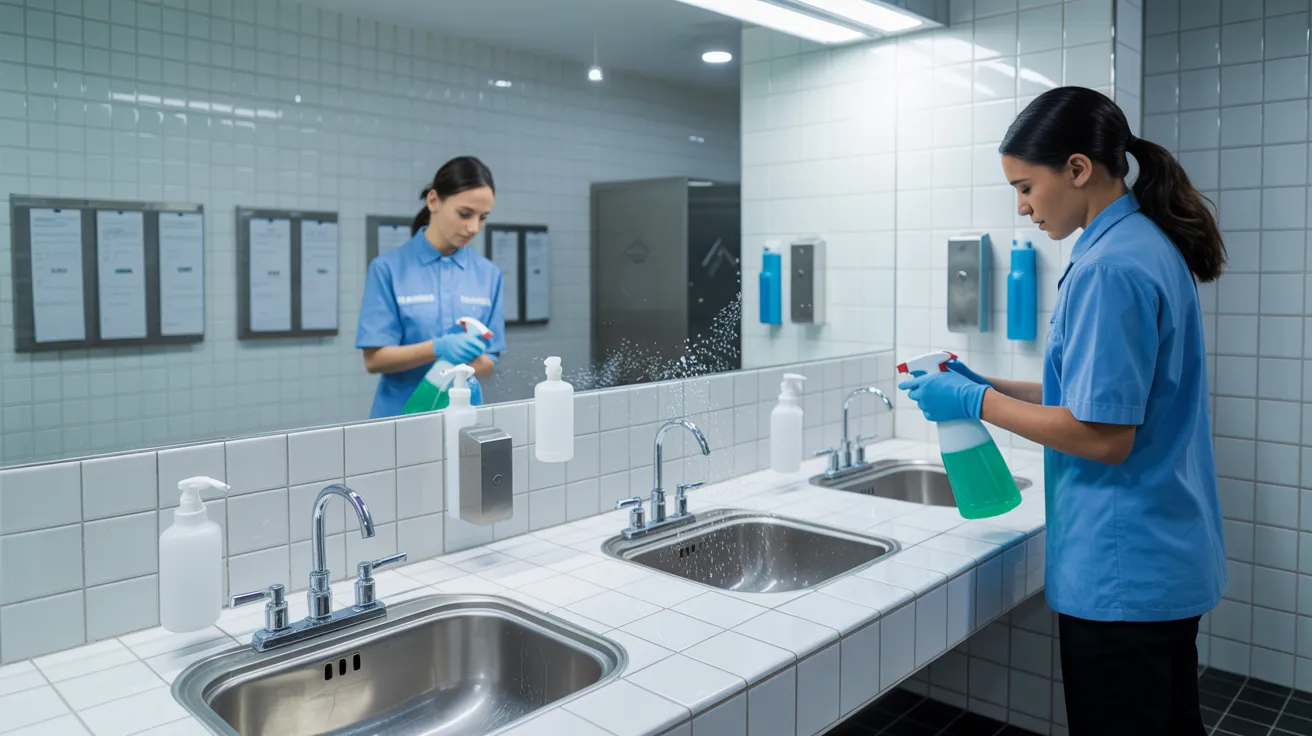
For restroom sanitation, cleaners disinfect high-touch surfaces, bathroom fixtures, stall dividers, supply dispensers, and trash receptacles, then refill items and eliminate smells. They also service restaurant moprooms, where chemical storage, sink hygiene, and drainage conditions can affect sanitation compliance and staff safety daily.
How Food Safety Cleaning Benefits Brampton Operations
Brampton operations require proper hygiene standards to fulfill compliance obligations and pass inspections. You also reduce cross-contamination by cleaning and sanitizing food-contact surfaces, equipment, and high-touch areas correctly. Most importantly, you help protect public health by lowering the risk of foodborne illness in your facility.
Regulatory Code Requirements
Because Brampton food establishments operate under mandatory safety protocols, food safety cleaning directly impacts your competence to adhere to health code requirements, protect customers, and avoid enforcement action. You must maintain hygienic food handling zones, written maintenance records, appropriate product handling, and verifiable staff procedures that comply with municipal and provincial inspection expectations.
Detailed hygiene logs help you in demonstrating due diligence during compliance reviews and proving your procedures follow consistent patterns that are replicable and overseen.
Cross-Contamination Prevention
Following health code standards depends on your ability to prevent cross-contamination in daily food handling and cleaning. You should isolate raw items from prepared foods, disinfect work areas after use, and store chemicals away from food-contact items. Well-defined guidelines decrease contamination chances and support consistent compliance during inspections.
You should implement allergen segregation to prevent major allergens from touching common work areas, storage bins, or tools. Employ separate boards, labeled implements, and careful equipment identification so staff don't mix items throughout cooking or serving. Mandate washing hands following raw meat, seafood, eggs, or allergen-containing products. Replace wiping cloths regularly, and check disinfectant potency using test kits. When you train staff to follow these controls every shift, you build a more hygienic, secure workplace that satisfies Brampton's safety standards daily.
Public Health Assurance
When sanitation protocols fails, you don't just face inspection failure—you increase the chance of foodborne illness impacting customers, staff, and the wider Brampton community. You also undermine your responsibility in protecting public health, especially in high-traffic food premises where contamination can spread quickly through surfaces, equipment, and touchpoints.
You must implement sanitation protocols that remove soils, effectively sanitize, and verify results. This involves maintaining contact periods, deploying approved disinfectants, maintaining records, and coaching staff to meet health-unit expectations. These initiatives promote pathogen control by reducing microbes before contaminating food or hands. In Brampton, effective cleaning protects at-risk groups, minimizes disease spread, and demonstrates accountability. When you adhere to proper protocols, you exceed requirements—you substantially reduce risk and promote secure food service across the region.
Why Is Cleaning Essential for Food Safety Compliance?
Maintaining comprehensive cleaning schedules supports food safety compliance by lowering contamination exposure, managing pathogen expansion, and keeping your facility meeting sanitation requirements under HACCP-based programs and public health regulations. You validate that food-contact surfaces stay visibly clean and microbiologically controlled, enabling documented preventive controls and inspection readiness.
Comprehensive cleaning additionally enhances allergen management by extracting residues that can provoke undeclared allergen exposure. When you combine validated sanitation procedures with compliance training, your staff can adhere to consistent approaches, apply approved chemicals accurately, fill out documentation properly, and respond to deviations prior to problems worsen. Ongoing discover the facts cleaning promotes supply chain documentation, establishes corrective steps, and proves accountability when audited. Furthermore, it aids you maintain product safety, copyright operational compliance, and reduce the likelihood of punitive measures, recalls, formal complaints, and avoidable health hazards.
Determining When to Plan Commercial Cleaning
Plans for cleaning perform best when created based on risk factors, production capacity, and regulatory needs instead of just a predetermined calendar.
bi-weekly schedules for drains, vents, storage racks, and hard-to-reach equipment zones, based on inspection findings and sanitation records.
How Do You Choose Brampton Cleaning Experts?
Start by screening providers against food-safe sanitation requirements, not cost only. You should verify that each company understands CFIA, public health, and HACCP compliance standards relevant to your facility. Ask for insurance documentation, WHMIS compliance, documented staff training, and supervision practices. Review whether technicians understand cross-contamination risks, chemical handling, and traceable sanitation records.
You should further examine operational reliability and accountability. Request references from food facilities in Brampton, then review response times, corrective action plans, and communication protocols. Validate the company supports supplier audits and can present inspection-ready documentation to regulators or third parties. Confirm equipment receives maintenance, colour-coded tools are used appropriately, and site-specific hazards are identified. A experienced service protects compliance, product integrity, and your reputation in the market.
Which elements are part of a Food Safety Cleaning Plan?
Put together a written plan that clarifies every sanitation duty, standard, and accountability ahead of production commencement. You should specify cleaning intervals, permitted substances, dilution percentages, exposure times, instruments, and inspection methods for each zone, surface, and piece of equipment. Make sure to include pre-operational inspections, corrective actions, and employee training requirements.
Your framework should also cover cross-contamination prevention, waste disposal, pest management measures, and scheduled documentation for restrooms, drains, floors, and food-contact areas. Clarify how you'll distinguish raw from ready-to-eat operations, help with ingredient tracking, and copyright accurate allergen labeling through validated cleaning between product changes. You should establish accountability, preserve signed records, and review results against regulatory standards, HACCP controls, and customer requirements. When gaps appear, adjust procedures immediately and re-educate staff.
Popular Inquired Questions
Can cleaning services support overnight shifts in Brampton properties?
If you run controlled spaces, you'll also need records that enable audits and ensure compliance.
Are emergency spill response solutions available from Brampton cleaning experts?
Yes, you can expect many Brampton cleaning experts to provide hazard containment solutions. They manage hazardous materials, assess risks, contain contamination, and start rapid decontamination to minimize risk and operational disruption. You should confirm their response times, professional credentials, PPE protocols, and disposal procedures. If your facility must meet health or food safety regulations, select a service that documents incidents, follows compliant sanitation standards, and supports audit readiness.
Do eco-friendly disinfectants function safely on food-contact surfaces?
Definitely, plant-based sanitizers work safely on food-handling equipment if you source products labeled food safe that meet compliance requirements. You ought to validate contact duration, concentration levels, and rinse requirements in advance of use. Natural-based solutions decrease chemical burden, but you should obtain evidence of effectiveness against target microorganisms. To keep surfaces residue-free, implement manufacturer directions precisely and ensure your disinfecting agent meets food sanitation requirements.
Will maintenance plans respond to production fluctuations?
Absolutely, cleaning plans enable modification for production fluctuations. Modify intervals, staffing, chemicals, and verification steps to fit production rhythms while maintaining compliance standards. Minimize equipment downtime through scheduling disinfection around line changes, maximum output, and equipment use patterns. Also revise written procedures, training, and environmental monitoring to account for transient threats, new allergens, or increased soil loads. Periodic assessments ensure the schedule efficient.
Will commercial cleaners train employees on sanitation best practices?
Indeed, professional cleaners typically provide staff training on proper hygiene. Your staff obtains instruction on proper chemical use, contact times, preventing cross-contamination, equipment breakdown, and record-keeping. They generally adhere to training with HACCP, GMP, and CFIA or local public health criteria. Many also execute sanitation audits to verify compliance, identify gaps, and reinforce corrective actions. This supports you in establish reliable processes, achieve compliance, and reduce food safety risks on a daily basis.
Conclusion
When you partner with Brampton commercial cleaning and food safety specialists, you aren't merely cleaning—you keep your operation audit-prepared and your protocols above board. From kitchens to processing floors, every clean surface and maintained area helps reduce unwelcome guests and avoid expensive problems. By arranging cleanings at the proper frequency and following a clear cleaning plan, you protect employees, customers, and your brand image. In a tightly regulated environment, sanitary conditions are essential—they're fundamental to proper operations.